
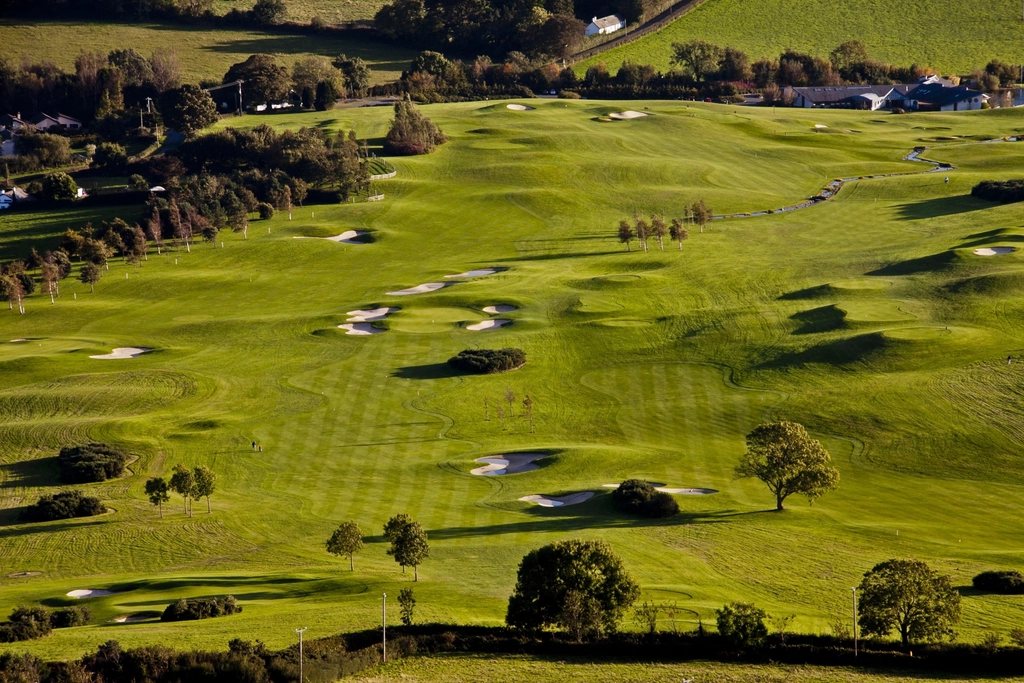
Sooner or later, most golfers dream of playing where the game was born. Scotland has been playing golf on its east coast for at least five centuries, and Ireland’s Atlantic dunes hold some of the wildest courses on earth. A trip there is not out of reach for an ordinary Canadian player with a modest handicap and a willingness to walk in the rain. But the first visit surprises almost everyone, because the golf, the booking, the customs and the weather are different in ways the guidebooks do not always explain. This is what we wish we had known before our first round on a real links.
Table of Contents
The ground game
The single biggest difference is the turf. Links fairways are firm, fast and bumpy, and the ball does not stop where it lands. An approach that would sit softly on a Canadian green runs 20 metres past. The shot that works is the low one: a punched iron, a bump and run with an eight iron from 30 metres out, a putter from the fringe or well beyond it. Bunkers are small, deep and revetted with stacked turf walls, and the only sensible play from most of them is sideways or backwards. The rough is knee-high fescue and gorse; a ball in it is usually a ball lost, so play for the fairway even if it means a shorter club off the tee.
Greens are large and undulating, often shared between two holes, and putts of 30 metres are normal. Wind is constant. The east coast of Scotland is drier than people expect, with about 650 to 700 millimetres of rain a year at St Andrews, roughly the same as Winnipeg. The west coasts of both countries get double that. Rain in these places rarely stops play; a good waterproof suit and a towel under the umbrella keep you going.
Scorecards in yards, and other small differences
Scorecards in Britain and Ireland are in yards, and so is every distance a caddie or a marker gives you. A yard is 0.914 metres, so a 150-yard shot is about 137 metres; if you think in metres, a rough rule is to subtract ten per cent. Yellow and white tees are the ordinary visitor and competition markers; red tees are forward. Many courses ask that you play from the yellows unless you carry a low handicap.
Walking is the norm and at many courses the only option. A powered cart is called a buggy and is often available only with a medical reason. Pull trolleys are cheap to rent. Caddies are a tradition worth trying once at a famous course; expect to pay a set fee plus a tip, and expect to learn more about the course in four hours than you could in a lifetime of reading. Pace of play is faster than at home: three and a half hours for a four-ball is expected, and two-balls play through. Some clubs reserve certain days for two-balls or for the alternate-shot format called foursomes, so read the visitor pages carefully.
Who can play where
Most of the famous links are private members’ clubs that welcome visitors on set days and at set times. The famous public exception is the town of St Andrews, whose courses are run by a public trust on behalf of the town and are open to anyone, though the oldest one requires a handicap certificate and has more demand than tee times. Its most famous course is closed on Sundays so that people can walk on it. Many clubs ask for a handicap certificate or an official index, typically 24 or 28 for men and 36 for women, so if you are a beginner, get an official handicap through your provincial golf association before you go; it takes a few rounds and is straightforward.
Dress codes are a notch more formal than at a Canadian public course. Collared shirts, tailored shorts or trousers, no denim, and in some clubhouses a jacket for the dining room. Change your shoes in the car park or the locker room, not the clubhouse lounge.
How to book a tee time
Visitor tee times at the well-known courses are released online, usually a year in advance, and the best summer weeks go quickly. The general pattern is: pick your dates, list the courses you most want, check each course’s visitor days, and book the two or three that matter most before booking flights. Fill in around them with the many excellent, less famous courses along the same coast, which can often be booked a few weeks ahead. The oldest course at St Andrews works differently: a share of tee times is reserved for a daily ballot, drawn two days ahead, which you enter online or by phone with a partner and a handicap. Singles can also queue at the starter’s hut at dawn for unfilled slots.
Green fees at the most celebrated courses are high and rise every year; a week that mixes one or two famous names with several local links costs a fraction of a week of nothing but famous names and is, in our view, more fun.
Where to go for a first trip
For Scotland, the east coast between Edinburgh and Aberdeen holds the greatest concentration of classic links: North Berwick, Gullane, St Andrews, Carnoustie, Montrose and Cruden Bay, most within two hours’ drive of one another. The far north around Dornoch and Brora rewards a longer drive with daylight until after ten at night in June, since Dornoch sits near 58 degrees north. The west coast of Ireland from Lahinch through Ballybunion and Waterville to the Dingle peninsula is the classic Irish loop, with Portrush and the causeway coast in the north a second trip in itself.
The best months are May, June and September: long days, firm fairways, and fewer visitors than July and August. April and October are cheaper and often lovely, with the risk of a wet week.
A last word on expectations
You will not score well on your first links, and you should not try to. Your first blind tee shot over a dune, your first putt from 40 metres, your first bunker you cannot get out of forwards: these are the point. Drive on the left, carry cash for the caddie, pack twice the waterproofs you think you need, and go for a walk in the place where the game started. It will change the way you play at home.