
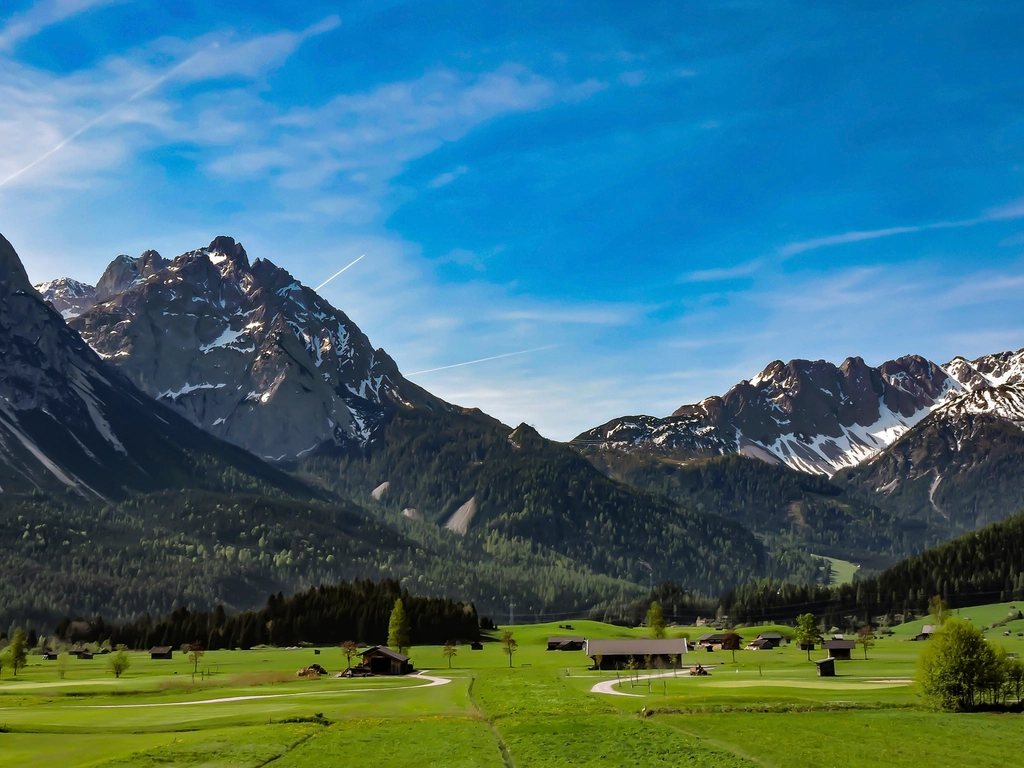
The first time we played a mountain course, a well-struck seven iron sailed clean over a green we had been aiming at for years with that same club. That is the pleasure and the puzzle of golf at altitude: the game you know is still the game, but the numbers move. This article looks at what actually changes when you play in the Rockies or the Laurentians, how to adjust your clubbing, what elevation changes do to a hole, and the practical matters of weather, wildlife and season that make mountain golf different from the flat course back home.
Table of Contents
Why the ball flies farther in thin air
Air gets thinner as you climb, and thinner air means less drag on the ball. At the elevation of the Banff townsite, about 1,380 metres above sea level, the air is roughly 14 per cent less dense than at the coast. Kananaskis Country, in the front ranges south of Canmore, sits near 1,500 metres. Jasper is lower, around 1,060 metres. A common rule of thumb is that a ball carries about two per cent farther for every 300 metres (1,000 feet) of elevation, so a shot that carries 150 metres at sea level goes about 160 metres in Banff. Longer clubs gain more in absolute terms than short irons, and the effect is on carry rather than roll.
The practical adjustment is simple: take one club less than you would at home for a full shot, and on a long approach possibly two. The mistake almost everyone makes on the first day is not trusting this. You will see the flag 150 metres away, reach for the club you always use, and airmail the green. By the third round you will have stopped doing that. Keep in mind that thin air also reduces the effect of spin, so slices and hooks curve a little less, which most beginners will count as good news.
The Laurentians are a different matter. The courses around Mont-Tremblant, Saint-Sauveur and Val-David sit between about 250 and 450 metres, and at that altitude the difference from sea level is a couple of metres on a full shot, less than the wind on a normal day. In the Laurentians, what matters is not the altitude but the terrain.
Uphill, downhill and the shot you cannot see
Mountain courses are built on slopes, and elevation change on a single hole can be dramatic. A tee perched 30 metres above the fairway, an approach that climbs 15 metres to a green benched into a hillside, a par 3 that plays straight down to a pond. The old caddie rule works well enough: add or subtract roughly one metre of playing distance for every metre of elevation change. A 140-metre shot to a green 15 metres above you plays about 155. The same shot to a green 15 metres below plays about 125, and the ball lands more steeply, so it stops sooner.
Downhill shots are the ones beginners find hardest, because the landing area is often out of sight behind the brow of the hill. Pick a target on the far horizon, commit to it, and walk down to look. Uphill shots hide the green as well, and it is worth remembering that a hillside green tends to slope toward the fairway, so an approach that lands short tends to feed back down.
Putting on mountain greens is its own education. Everything breaks away from the high ground and toward the valley floor, even when your eyes tell you the green is flat. When in doubt, look at the mountains, find the low point of the valley, and expect the ball to drift that way.
Weather in the mountains
Mountain weather changes quickly, and a golf course is an exposed place. In the Rockies the pattern in July and August is a clear morning, cloud building over the peaks by early afternoon, and a thunderstorm around three or four o’clock that may last twenty minutes or two hours. Courses close for lightning and will sound a horn; head for the clubhouse, not a tree. The sensible schedule is an early tee time, which also gives you the calmest air.
Ultraviolet light is stronger at altitude, roughly ten per cent stronger for every 1,000 metres, and a round in the sun at 1,400 metres will burn you faster than the same round at home. Sunscreen, a hat and sunglasses are not optional. Mornings are cold even in August; a temperature of five degrees at the first tee and twenty-five by the turn is ordinary in Banff and Jasper. Dress in layers you can peel off and stuff in the bag. Drink more than you think you need, because dry mountain air pulls moisture out of you without the warning of sweat.
Wildlife on the course
The Rockies courses lie inside or beside national and provincial parks, and the animals were there first. Elk graze on fairways in Banff and Jasper and are entirely unbothered by a golf ball landing near them; give them 30 metres, more in the September rut when the bulls are irritable. Bears cross courses regularly. If one appears, the local rule is universal: stop play, do not approach, and let the course staff know. Coyotes, deer and ground squirrels are constant company. None of this is a reason to worry, but it is a reason to keep your eyes up and your food packed away.
The season is short
Snow lingers at these elevations. Rockies courses generally open in the middle of May and close in the middle of October, and the greens can be slow and bumpy for the first few weeks. The prime months are July and August, with September a favourite of ours for the golden larches and the empty afternoons. The Laurentians open a little earlier, usually late April or early May, and run into late October, when the maples turn and every hole looks like a postcard. Book well ahead for the high summer weeks in either range; the courses are few and the visitors are many.
Is mountain golf for a beginner?
Yes, with two qualifications. Choose the forward tees, because the forced carries over ravines and creeks that make these courses famous are the same carries that will empty a beginner’s bag of balls. And accept that you will lose some distance control for a day or two while your brain recalibrates. What you get in return is a walk through scenery that most people only see from a car window, at a pace that lets you look at it, with the small satisfaction of the occasional drive that just keeps going.